How to Keep Geraniums Until Next Year and Grow Dozens of New Plants for Free 🌺
Every autumn, the same story unfolds on balconies and patios: the geraniums that delighted us with their abundant blooms all summer gradually lose their beauty, the nights grow colder, and their leaves turn black after the first frosts.
Many people throw away their old plants and buy new ones in spring, without realizing that they can preserve their favorite flowers and propagate them completely free of charge.
Geraniums, also known as pelargoniums, are among the easiest plants to propagate from cuttings. From a single healthy plant, you can grow ten, twenty, or even more new plants.
The process is simple and takes very little time. The key is to act before the first frost, while the stems are still strong and full of vitality.
- When Is the Best Time to Take Cuttings?
- What You Will Need
- Step 1. Choose Suitable Shoots
- Step 2. Prepare the Cuttings for Rooting
- Step 3. Plant the Cuttings in Potting Mix
- Step 4. Provide the Right Light and Care
- Step 5. Transplant the Young Plants into Individual Pots
- What Should You Do with the Mother Plant?
- Common Mistakes That Cause Cuttings to Die
- How to Grow More Flowers Without Extra Expense
When Is the Best Time to Take Cuttings?
The ideal time is early to mid-autumn, while the plant still looks healthy and nighttime temperatures have not dropped to freezing. Pelargoniums do not tolerate frost well: even a slight cold snap can damage their leaves and stems. So, if the weather forecast predicts frost, do not put off propagation.
Choose a dry day and start working in the morning, when the plant tissues are still well hydrated. Suitable shoots should be firm, green, and strong. Shoots that are too soft or thin, as well as old, woody stems, are less suitable for rooting.
What You Will Need
Prepare everything in advance:
- A healthy, mature geranium plant.
- Sharp, clean scissors or a small knife.
- Small pots or a shallow plastic container with drainage holes.
- Lightweight potting mix for seedlings, preferably with some perlite or sand added.
- Rooting hormone, if desired.
- A bright spot on a windowsill.
- A watering can with a narrow spout or a gentle spray bottle.
Once everything is ready, you can begin propagating your geraniums.
Step 1. Choose Suitable Shoots
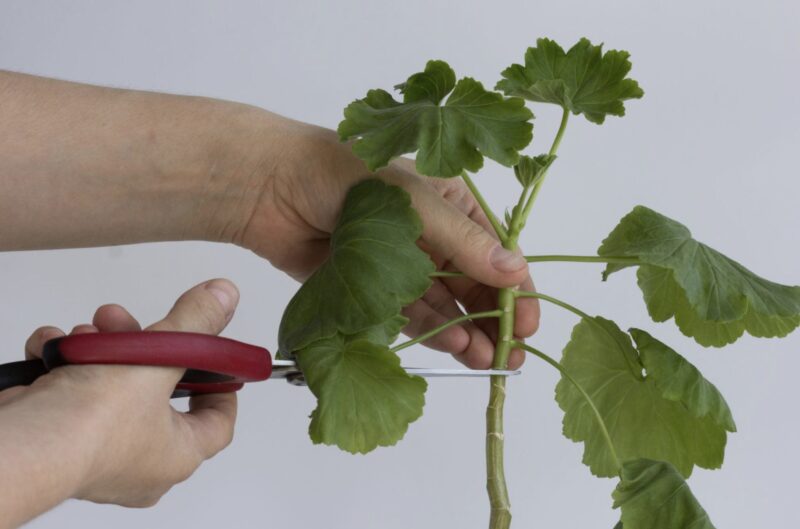
Examine the mother plant carefully. Select strong shoots without flowers, spots, damage, or signs of disease. Stems roughly as thick as a pencil are ideal.
Avoid shoots that are too thin or weak, as they may struggle to develop a good root system. Dry or damaged sections should also be left out.
Make the cut just below a node, the small thickened area on the stem from which leaves emerge. Roots generally develop particularly well in this area. Use a clean, sharp tool and make a slightly angled cut.
Try to take shoots from different sides of the plant so that you do not leave one section bare. A healthy geranium can easily tolerate having a few branches removed, and careful pruning can even encourage it to become bushier and more compact.
Step 2. Prepare the Cuttings for Rooting
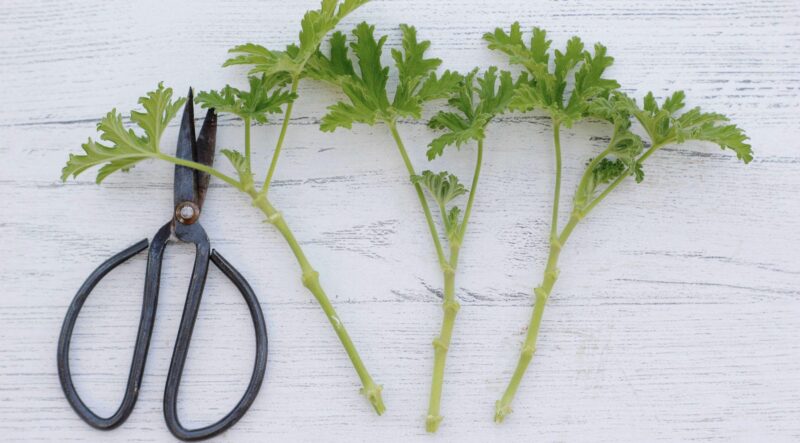
Each cutting should be approximately 8–10 centimeters (3–4 inches) long and have two or three nodes. Remove the lower leaves and any small leaf growth near the base, leaving just two or three leaves at the top.
If the upper leaves are particularly large, you can trim each one by about half. This reduces moisture loss and helps the cutting survive until roots develop.
Be sure to remove all buds and flowers. At this stage, the plant needs to direct its energy toward developing roots rather than flowering.
There is another important detail that beginners often overlook. Do not plant freshly cut stems immediately. Lay them on a dry paper towel and leave them for a few hours in a bright, well-ventilated place. If necessary, you can wait up to 24 hours, allowing the cut surface to dry slightly.
Geraniums have fleshy stems that can easily rot when exposed to excessive moisture. A short waiting period allows the cut surface to dry and form a protective layer, reducing the risk of rot.
Step 3. Plant the Cuttings in Potting Mix
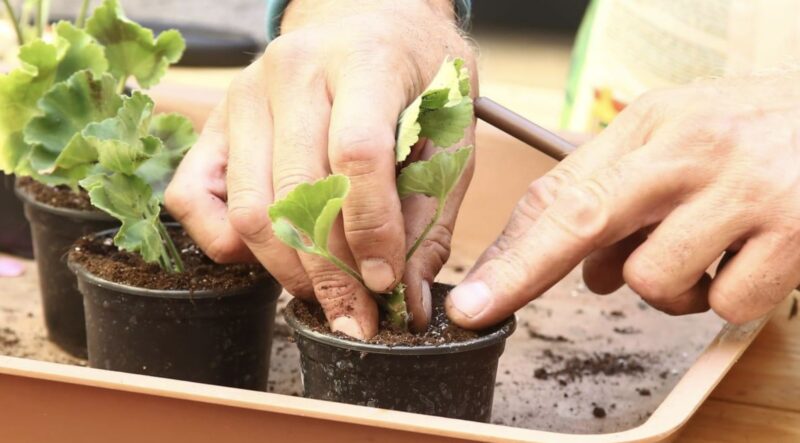
Fill the prepared containers with a loose, well-aerated potting mix. Moisten it lightly: the soil should be evenly damp, but not wet.
Use a pencil to make a small hole. If you wish, dip the lower end of the cutting in rooting hormone, then carefully place it in the soil to a depth of about 3–4 centimeters (1–1½ inches).
Gently press the soil around the stem so that the cutting stands upright and remains stable.
If you have prepared many cuttings, you can place them in the same container. Leave a few centimeters of space between them so that the leaves of neighboring cuttings do not touch. Good air circulation reduces the risk of mold.
There is one more essential rule: pots must have drainage holes to allow excess water to escape. Waterlogged soil can destroy even the most promising cuttings.
Step 4. Provide the Right Light and Care
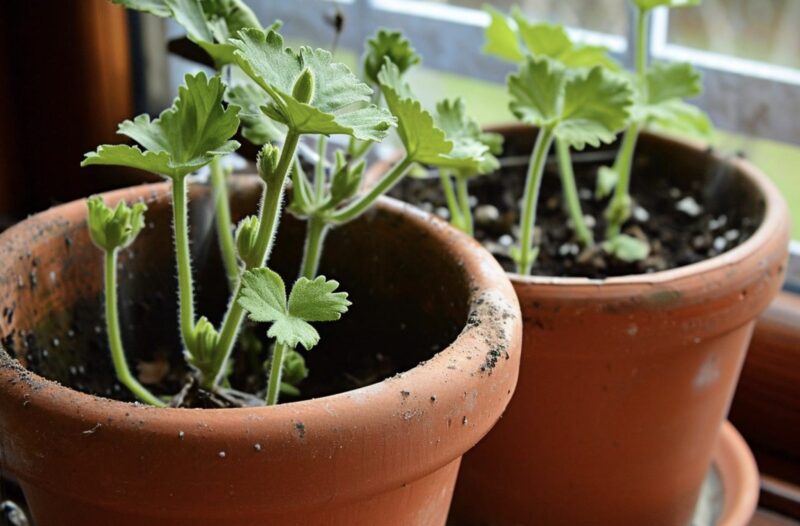
Place the containers in a bright location protected from direct sunlight. Before roots have formed, strong sunlight can quickly dry out the leaves and weaken the young plants.
A windowsill with indirect light or a bright room is ideal. Try to maintain a temperature of 18–22°C (64–72°F).
Water sparingly when the top layer of soil begins to dry. The soil should remain slightly moist, but it must never become constantly wet.
Unlike many other plants, geranium cuttings generally do not need to be covered with a plastic bag or a closed lid. Excess moisture can accumulate under such covers, encouraging fungal diseases and rot.
Under favorable conditions, the first roots appear in approximately three to six weeks. New leaves and noticeable shoot growth may indicate that rooting is progressing successfully. You can also gently tug upward on a cutting: if you feel resistance, the roots have probably begun to anchor themselves in the soil. Do not check this way too often, however, as you could damage the delicate young roots.
Step 5. Transplant the Young Plants into Individual Pots
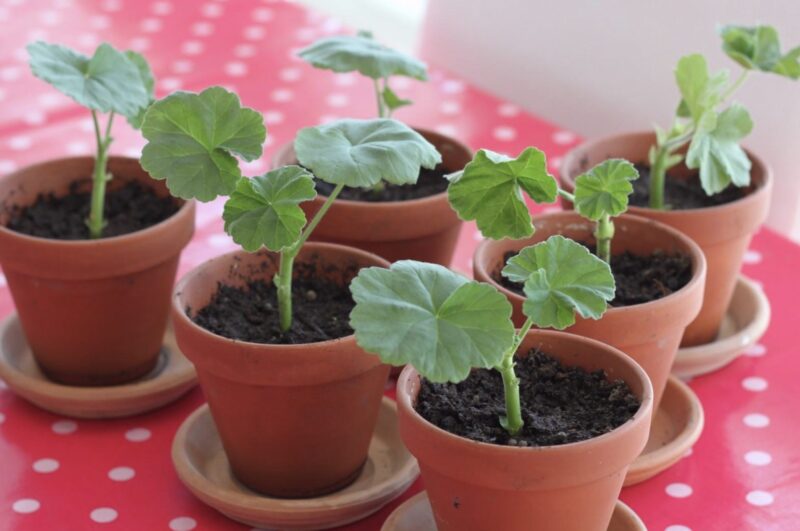
Once the cuttings have rooted and started growing steadily, transplant each one into its own small pot filled with good-quality, general-purpose houseplant potting mix.
Handle them carefully: young roots are still delicate, and rough handling can damage them.
During winter, keep your geraniums in a bright, cool room. If possible, maintain a temperature of around 10–15°C (50–59°F). The plants need much less water during this period, so water sparingly and allow the soil to dry out between waterings.
Young plants generally do not need fertilizer during winter. It is better to wait until late winter, when the days begin to get longer and signs of active growth appear.
In spring, once the risk of frost has completely passed, gradually acclimate the geraniums to outdoor conditions. Over one to two weeks, take them outside for short periods, gradually increasing the time they spend outdoors. After this, you can transplant them into their permanent pots, balcony planters, or flower beds.
What Should You Do with the Mother Plant?
If you want to preserve the mature geranium as well as the cuttings, that is entirely possible.
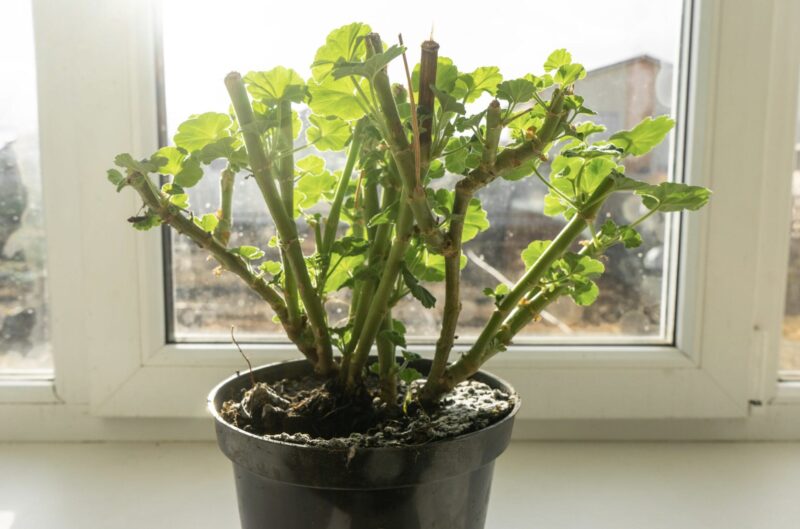
Before the cold weather arrives, trim the plant back by about one-third. Carefully inspect the leaves and stems for pests, then move the plant indoors.
A cool, well-lit location is best. During winter, water the plant infrequently and avoid keeping the potting mix constantly damp.
Do not worry if some leaves turn yellow or fall off. This is quite common when growing conditions change. As long as the plant remains healthy, it will gradually wake up in spring and begin producing new shoots.
Common Mistakes That Cause Cuttings to Die
Even with such an easy-to-grow plant, it is important to follow a few simple rules.
- Planting immediately after cutting. Fresh, moist cut surfaces are more likely to rot. Let them dry slightly before planting.
- Using plastic wrap or a sealed lid. Excess humidity interferes with healthy rooting and encourages fungal growth.
- Overwatering. This is one of the most common reasons propagation fails. It is better to underwater slightly than to keep the soil constantly wet.
- Leaving buds and flowers on the cuttings. They consume energy that the plant needs to develop roots.
- Taking cuttings too late. Frost can damage plant tissues, making it more difficult to grow healthy new plants.
- Using heavy garden soil. Dense soil does not allow enough air to circulate and retains moisture for too long, increasing the risk of rot.

How to Grow More Flowers Without Extra Expense
The summer flowering season does not have to end just because autumn arrives. A few carefully prepared cuttings, some lightweight potting mix, and proper care can help you preserve your favorite plants throughout the winter.
Imagine being able to grow an entire collection from just a few mother plants instead of buying new flowers every spring. Some plants can decorate your balcony, others can brighten your windowsill, and you can give the rest to friends and family.
The most important thing is not to wait until the first frost arrives. As long as your geranium is still healthy, you have a chance to preserve its beauty for another season and grow dozens of new plants at virtually no cost.