My housekeeper had worked honestly for me for two years, but lately, I had noticed that every evening she took bags of food I never ate. When I demanded an explanation, she turned pale and whispered, “Please, don’t fire me…” I decided to follow her, and what I saw shook me to my core… 😨
Marina had been working for me for two years. Every morning, she arrived precisely at 7:15, cleaned the house thoroughly, and prepared everything I asked her to. She was never late and never complained, even when she had to stay longer.
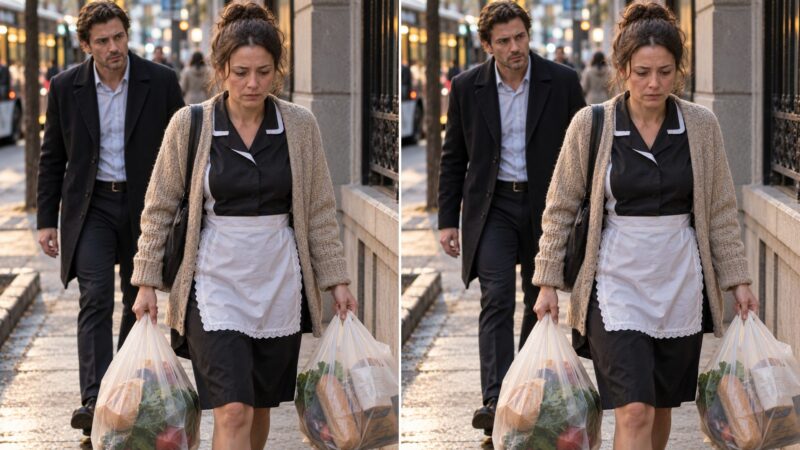
But over the past few months, I had noticed that she left every evening carrying a large bag. At first, I paid no attention to it, until one day I saw her putting meat, bread, vegetables, and other groceries into it—food I usually asked her to throw away.
“Marina, what are you planning to do with all that food?” I asked as she headed toward the door.
She startled and clutched the bag against her chest.
“Please, don’t fire me! It’s food you don’t eat anyway. I thought it would be better to take it than to throw it away.”
I looked at her more carefully.
“All right, I’m not going to fire you. But tell me honestly: why do you need those leftovers?”
Marina lowered her eyes.
“I’m sorry, Mr. Robert. I can’t tell you.”
She left, and an unpleasant feeling lingered with me. Why was a grown woman so afraid to explain where she was taking ordinary food?
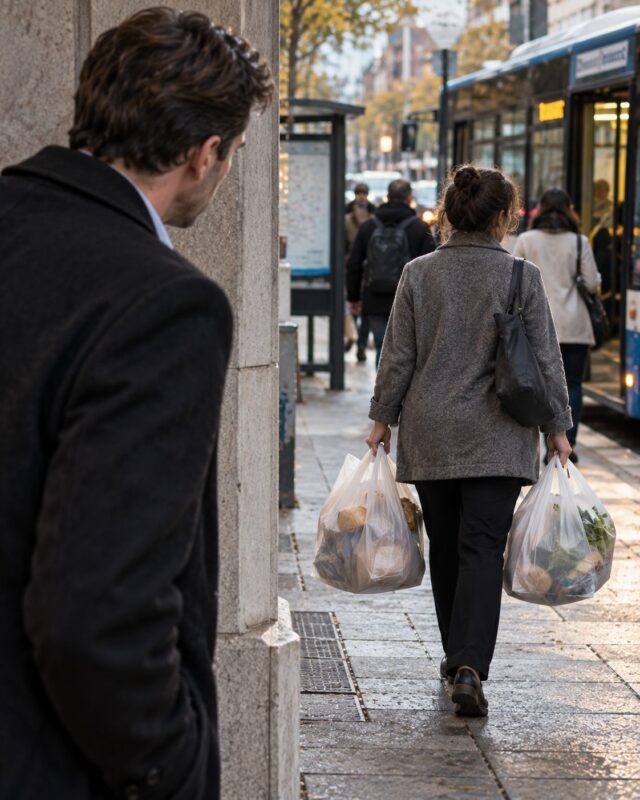
That evening, I decided to follow her. Marina took a bus and got off near a large hospital. She hurried inside and made her way toward the pediatric department.
On the wall, I noticed a sign: “Pediatric Oncology.”
Marina stopped outside one of the rooms, took out some food containers, and quietly went inside. I moved closer and heard her say:
“I brought you something to eat, sweetheart. I’m sorry, I couldn’t manage to bring more today…”
I looked into the room and was so shocked that I couldn’t utter a single word… 😨
The continuation is in the first comment 👇
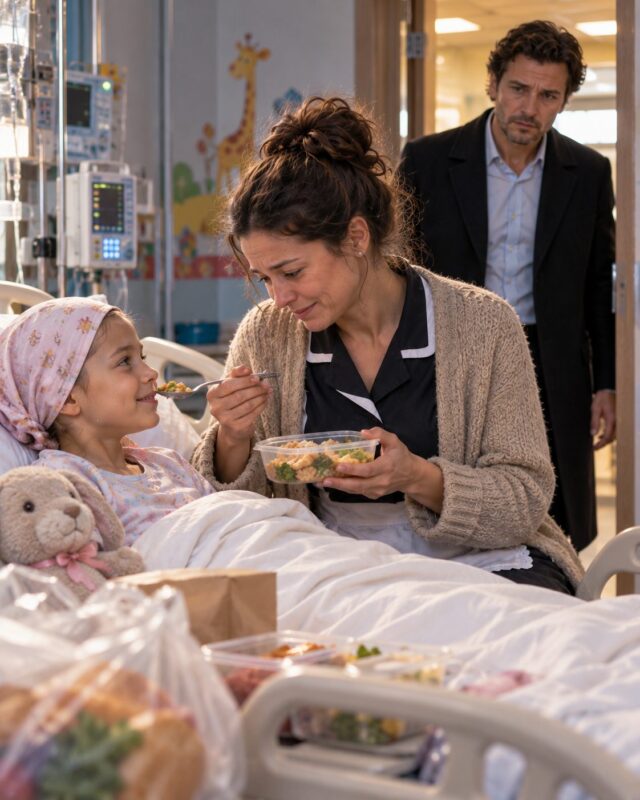
I stood in the doorway, unable to take my eyes off the little girl. She looked about eight years old. She lay beneath a white blanket while Marina sat beside her, carefully feeding her from a plastic container.
“Mommy, will you bring me this food again tomorrow?” the girl asked softly.
“Of course, my sunshine. I’ll figure something out,” Marina replied, stroking her daughter’s head.
My heart tightened. I realized that all those months, the woman hadn’t been taking food from my house for herself. She had been bringing it here for her sick daughter.
Marina noticed me and jumped to her feet. The container slipped from her hands.
“Mr. Robert… Please, don’t fire me! I know I should have asked your permission. But Sofia barely eats the hospital food, and every day she asks for homemade meals. I simply don’t have the money to buy everything separately…”
She spoke quickly, too frightened even to look me in the eyes.
“Why didn’t you tell me anything?” I asked.
“I didn’t want you to feel sorry for me. I need a job, not charity. If I lose it, I won’t have enough money for transportation or medication.”
Only then did I learn the whole truth. Sofia had been receiving treatment for leukemia for several months. The girl’s father had left after learning about the diagnosis, and Marina was trying to manage everything on her own. After work, she traveled to the hospital, stayed beside her daughter until late in the evening, and then returned to my house the next morning at precisely 7:15.
Even when life was hardest for her, she had never been late.
I looked at Marina. She stood before me, clutching the empty bag in her hands as though she were waiting for a sentence to be passed.
“You’re not fired,” I said quietly. “And you won’t have to take food secretly anymore. Starting tomorrow, I’ll personally make sure Sofia has fresh food. But now, tell me what kind of help you really need.”
Marina covered her face with her hands and burst into tears. She didn’t cry loudly or make a scene. For the first time in a long while, she simply allowed herself to stop pretending she could carry everything on her own.
But I didn’t stop there. I helped her complete the paperwork for social assistance, contacted a charity that supported families with children undergoing treatment, and gave her a raise. Later, my employees also learned about Sofia and decided to collect money to cover the additional expenses.
I couldn’t promise that the girl would definitely recover. But Marina no longer had to face her hardship alone.
A few weeks later, I returned to the hospital. Sofia was already sitting up in bed, drawing. When she saw me, she smiled and held out a picture.
It showed her, her mother, and me. Above our heads, the little girl had written in uneven letters: “Thank you for helping my mommy.”
I turned away to hide my tears.
That day, I understood how little it sometimes takes for someone to feel that they haven’t been abandoned. Marina had taken care of my home for two years, yet I had never truly stopped to ask what was happening in her own world.
From that day on, I no longer saw her as merely an employee. I saw a mother who fought every day for her daughter while still trying to earn an honest living.
And every time I remember that hospital corridor, I feel ashamed that my first suspicion was that she had been deceiving me. Because behind an ordinary bag of food, there was neither greed nor cunning, but a mother’s love—the kind of love that can make a person do absolutely anything.