😱😲 I have been working in an elementary school for seven years and thought nothing could surprise me anymore — I was wrong.
That day, the heat seemed to conspire against us: the classroom walls trapped the warmth, the air stood still, and the children’s faces gradually lost their liveliness, becoming dull and exhausted.
Amid all this chaos, my gaze kept returning to Lily — a small girl in a thick gray hoodie, who looked completely out of place in this heat-melted world.
She moved slowly, as if every action required effort, and when I tried to persuade her to take off the hoodie, something disturbing flickered in her eyes — far too mature for a six-year-old child.
The words about being “cold” and having a “sun allergy” sounded false, but there was no time to investigate — noise, shouting, buses, parents.
Outside, things became even worse. The asphalt burned, the air shimmered, and that was when I saw Lily turn pale to a grayish shade, as if her strength were leaving her right before my eyes, and the arrival of her stepfather only made it worse.
And when Lily collapsed, the sound of the impact seemed to tear reality apart. I was by her side before I had time to think, feeling fear tighten around my chest.
Her stepfather tried to stop us, shouting at the top of his lungs:
“She’s allergic to the sun, you can’t take off her hoodie.”
When the nurse and I cut the hoodie open, the world seemed to freeze. The realization didn’t come immediately, but at that very moment, I gasped…
Continuation in the comments. 👉 If you don’t see the new part, tap “Show all”.👇

…I gasped because the truth was more terrifying than any assumptions, yet it didn’t scream through wounds, but through the silence in which this child had lived for far too long.
Beneath the thick fabric was no “illness” — there was systematic pain, abuse, carefully hidden from prying eyes and justified by the lies of adults.
After that, everything happened quickly and was no longer in my control. The ambulance arrived, then the police.
The stepfather no longer shouted — his confidence crumbled the moment people appeared who asked the right questions.

He stumbled over his explanations, demanded that we “not make a scene,” but it was too late: indifference was no longer a shield.
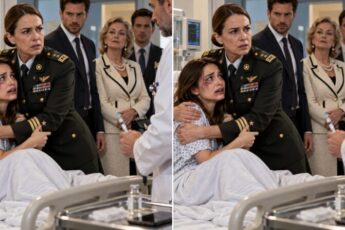
Lily was taken to the hospital, where she finally had people beside her who didn’t look through her, but truly looked at her. Later, I learned that she was temporarily placed under protection and that the case had been given an official course.
For a long time, I couldn’t forget that day — not because of the screams or the chaos, but because of the look Lily gave me just before the ambulance doors closed. There were no tears in it, only quiet relief.